
Find The Needle Hay Products Guide (2026): Processing Chain
Every hay product listed for Find The Needle — pulp, bales, eco bricks, paper, pellets, bioplastic and carbon fibre — and how to decide what to process first.
Hay is not just the thing you dig in Find The Needle. It is the raw material for a production chain. The Steam store lists seven product families: hay pulp, compressed bales, eco bricks, hay paper, pellets, bioplastic and carbon fibre. Each one turns the same yellow pile into something more valuable — and more demanding.
This guide explains what each product likely represents, how to choose what to process, and why the most expensive product is not automatically the best one to build first.
Product names are from the official Steam store page, checked November 2, 2026. Exact recipes, machine requirements, prices and processing times are not published. The chain below is a planning model based on the names and the store's “five production stages” description, not a confirmed crafting tree.
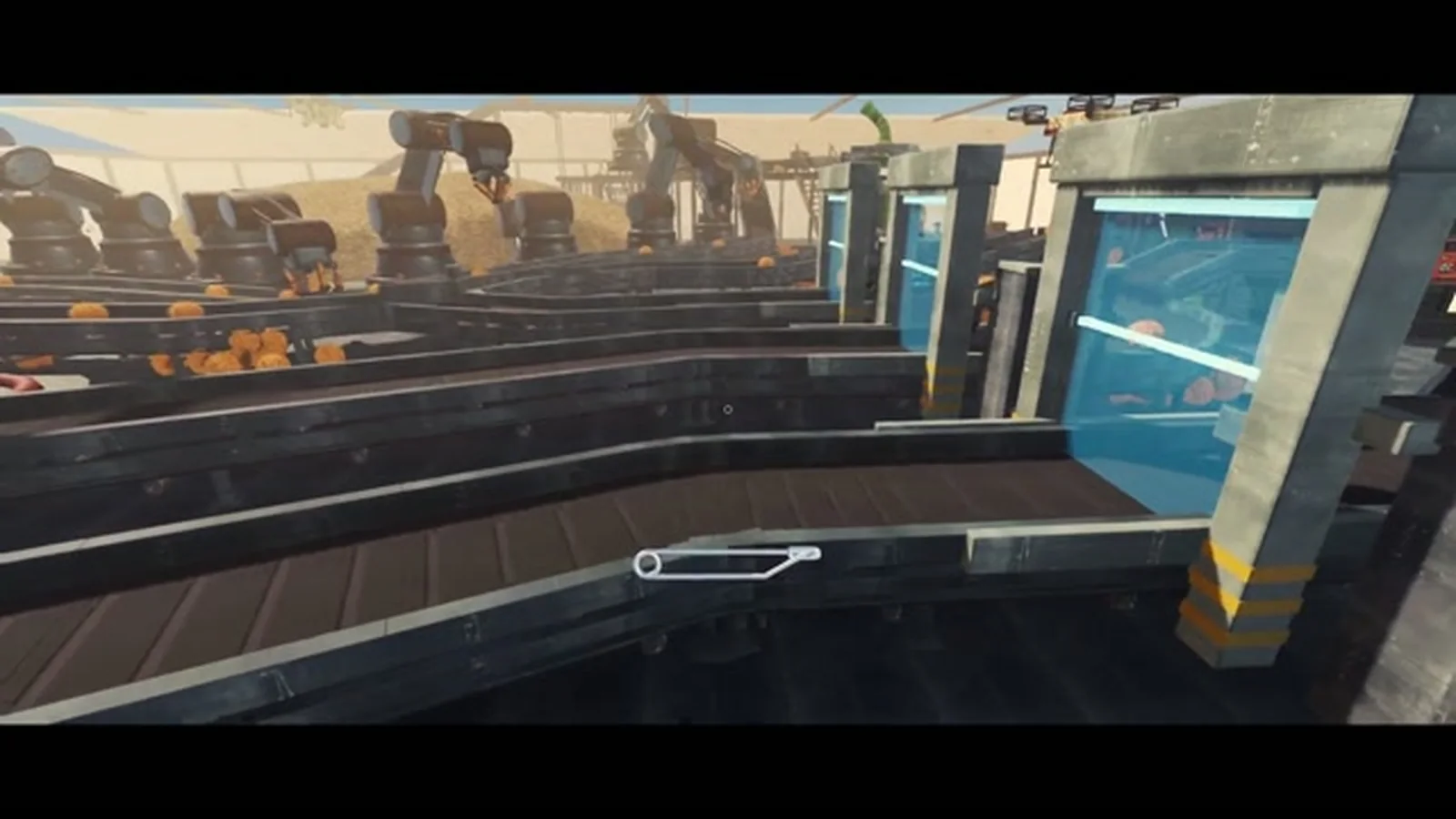
Why process hay at all?
Raw hay has one job: be sold. Processed hay has a longer job: be sold for more, fulfil a delivery order, or become a material for the next product. The trade-off is always the same:
- Raw hay: zero machines, zero power, immediate money.
- Processed goods: machines, power, space, time, and a queue — but a higher price per unit of hay.
The switch is worth it when the processed product's extra value covers the machine's cost, the power cost and the time you spend building the line. Before that point, processing is a hobby.
The product ladder
Hay pulp
Hay pulp is the first step away from raw hay. It implies breaking the hay down into a wet or fibrous mass. In a production chain, pulp is usually an intermediate: you make it because the next machine needs it, not because you sell it directly.
Use it when: a recipe or delivery order asks for pulp, or the next product in your chain requires it.
Compressed bales
Bales are dense hay. The name implies transport and bulk sale. A baler is one of the first machines a new factory should consider because it turns loose hay into a compact unit that is easier to move and sell.
Use it when: you have more loose hay than you can sell in a trip, or a belt needs a denser item to move efficiently.
Eco bricks
Eco bricks are a construction-style product. The name suggests a building material made from hay or hay pulp. In game terms, they are likely a mid-tier crafted good with a higher value than a bale.
Use it when: you have a stable pulp or bale line and want a product with more processing steps. Do not build a brick line before the first machine runs reliably.
Hay paper
Hay paper is exactly what it sounds like: paper made from hay fibre. The store lists a paper machine, so this is a confirmed machine type even though the recipe is not public.
Use it when: the paper machine is unlocked and you have a fibre supply. Paper is likely a mid-game product, not a first purchase.
Pellets
Pellets are a densified product, often used as fuel or feed. In a factory game, they are a good bulk product: easy to move, likely in demand, and a natural step after bales.
Use it when: you want a high-volume product that fits an automated line. Pellets are usually less complex than bioplastic or carbon fibre.
Bioplastic
Bioplastic is a plant-based plastic. It implies a chemical or advanced processing step and a product that is more valuable than paper or pellets.
Use it when: you are in the mid-to-late game, have power capacity, and can supply the preceding material consistently. A bioplastic line that starves for input is worse than a smaller bale line that runs.
Carbon fibre
Carbon fibre is the top of the listed chain. It implies a high-tech material made from a fibre precursor, with a long process and a high sale value.
Use it when: you have a mature factory, a reliable power grid and a delivery order or buyer that justifies the complexity. This is not a first-week target for a new player.
A planning table
| Product | Likely role | Complexity | When to build |
|---|---|---|---|
| Hay pulp | Intermediate | Low | When a recipe needs it |
| Compressed bales | Bulk sale / transport | Low | First processing machine |
| Eco bricks | Construction good | Medium | After a stable bale line |
| Hay paper | Crafted good | Medium | When paper machine unlocks |
| Pellets | Bulk fuel / feed | Medium | When you want volume |
| Bioplastic | Advanced material | High | Mid-to-late game |
| Carbon fibre | High-tech material | Very high | Late game, with demand |
“Complexity” is a judgment based on the number of implied steps, not a datamined recipe. The actual game may differ.
What to process first
For most players, the first processing machine should be the one that solves the current surplus. If loose hay is piling up at the sell point, a baler is the obvious first step: it compacts the surplus and gives you a saleable unit.
If the surplus is already compact and the bottleneck is sale price, the next step is a product with more value per unit — likely pulp, paper or pellets, depending on what the tech tree unlocks.
Do not start with bioplastic or carbon fibre. They are late-chain products. A new factory that tries to build the top of the chain before the bottom will spend all its money on machines it cannot feed.
Storage and buffers
Every processing chain needs a buffer. A machine that runs in batches needs a place to put its output while the next machine is busy. A belt that arrives continuously needs a place to queue when the machine stops.
Use storage for:
- raw hay before the first machine
- intermediate products between stages
- finished products waiting for a delivery order
- fuel or power inputs if the game uses them
Do not use storage as a substitute for a bottleneck fix. A full chest does not make the machine faster; it just hides the queue.
Power and space
The higher you go on the product ladder, the more power and floor space you need. A carbon fibre line may need multiple machines, several belts and a dedicated power supply. Plan for that space before you build; retrofitting a crowded factory is harder than leaving an empty bay.
A useful layout rule: each production stage gets its own row. Raw hay enters on one side, intermediate products move to the next row, and finished products leave on the other. This makes it obvious where a queue is forming.
Selling processed goods
Processed goods are not automatically better than raw hay. Check three things:
- Does a buyer exist? A delivery order or a sell point must accept the product.
- Is the price per hay higher? Compare the full input, not just the output.
- Is the line reliable? A product that stops when one machine jams is worse than a raw sale that never stops.
If the answer to any of those is no, sell raw hay until it is.
Common product-chain mistakes
- Building the top of the chain first. You cannot make carbon fibre without the precursor.
- No buffer between stages. The line stops every time a machine cycles.
- One belt for multiple products. Add a sorter or separate lanes.
- Ignoring power. A beautiful line with no power is a museum.
- No expansion space. The next machine has nowhere to go.
- Processing everything. Keep selling raw hay for cash flow while the processed line matures.
Related pages
Sources
Steam store page for App ID 5160800, checked November 2, 2026. The seven product names and the five production stages are from the store listing. Recipes, prices, machine requirements and processing times are not published; this page labels its chain model as a planning interpretation.
Related Find The Needle Guides
How to make money in Find The Needle: raw hay vs processed goods, delivery orders, reinvestment order, and why there is no universal best money farm yet.
A Steam wiki for Find The Needle by Needless Games: the six-million-strand haystack, 24 needles, money loop and factory automation for the 2026 EA launch.
Find The Needle has no Steam Achievements listed as of November 2, 2026. What that means, likely milestones, and how to prepare without fake unlock lists.
A structural guide to automating Find The Needle: manual vs semi-auto vs full-auto, belt layout, machine order, power and the bottlenecks that stall a factory.
A practical opening route for Find The Needle on Steam: what to dig, when to sell, which upgrades to buy first, and the mistakes that stall new factories.
How conveyors work in Find The Needle: placing a line, changing direction, reversing and enclosing belts, plus the layout mistakes that stop a factory.
More Find The Needle Guides
How to install the free Find The Needle demo, what the Steam demo build includes, what it leaves out, and whether progress carries into Early Access.
Find The Needle playtime estimates: 7–10 hours on the Standard pile, 30+ hours on Mountain. Plus what is known about the ending and 24-needle completion.
Answers to the most common Find The Needle questions: release date, price, demo, Early Access, multiplayer, Steam Deck, needles, playtime and mods.
A guide to Find The Needle's 300+ upgrade tech tree and machine tiers: what to unlock first, how the five production stages fit together, and what to skip.
Find The Needle is single-player only on Steam, with no co-op, no multiplayer and no Workshop support listed. Here is what the tags mean and how mods may work.
Find The Needle has 24 needles total, per the Steam store. How the hunt works, how to search efficiently, and why there is no public location list.
Find The Needle's Steam price was not announced as of November 2, 2026. Here is how to check it, what Early Access includes, and why the demo matters.
Find The Needle releases on Steam Early Access on November 6, 2026. Here is what is confirmed, what is not, and what to check on launch day.